Global Warming
Mother Earth- A human family crisis

Heat Isn’t the Whole Story
I have been slowly reading Amitav Ghosh’s The Great Derangement: Climate Change and the Unthinkable (2016, University of Chicago Press). A novelist and storyteller, Ghosh approaches the climate crisis not only as an environmental emergency, but as a profound cultural failure. He writes, “Quite possibly…this era which so congratulates itself on its self-awareness, will come to be known as the time of the Great Derangement.” Through literature, politics, personal observation, and lived accounts of climate impacts, Ghosh examines the hubris of modern society and its inability to fully confront the scale of what is unfolding. He argues that artists and writers must begin to engage directly with the apocalyptic realities of our time—because reshaping how we imagine and narrate the world may be one of our few remaining sources of hope,
Ghosh suggests that modern literary forms—portray ordinary human dramas: family, romance, ambition, social mobility. Climate catastrophe, by contrast, is vast, collective, and chaotic. It involves floods, wildfires, extinctions, and atmospheric systems that feel too large to fit into the “normal” plotlines of modern fiction. A
Climate events often appear in culture as anomalies—background noise, metaphors, or science fiction—rather than as the central reality that we are living with.
Reading his book had me to thinking about how we circulate ideas, categorize “things” and deal with concepts that are hard to grasp.
Understanding what is happening is key. Keeping up with science, technology, and the legal world demands an enormous amount of time and attention. In the end, it is often storytelling—shaped and passed down over time—that helps us make sense of a complicated world. Yet in much of our literature, Mother Earth has remained largely absent from the narrative.
Through stories and images, we glimpse the possibility of transformation, and in that vision, we find the spark to step out of the doomsday loop and into resilience.
But first, understanding what is happening is key—seeing clearly the challenges, the patterns, and the connections that shape our world. Only with that awareness can imagination turn into meaningful action.
We’ve been trained to solve problems by breaking them into parts: identify variables, isolate causes, categorize, simplify. Take the world apart, name the pieces, control the variables. That works well in math and engineering because it makes complexity manageable.
But the story of nature doesn’t work that way. Ecosystems aren’t neat compartments. The The health of a redwood forest, for example, can’t be understood by studying trees alone—you also need to observe soil microbes, rainfall patterns, fire cycles, insects, and the broader ecological web of life, along with human land use and climate pressures, all interacting over time.
Relying too much on a parsing out mindset creates blind spots:
· It encourages linear cause-and-effect thinking
· It overlooks interdependence
· It can lead to policies that “fix” one thing while breaking another
We tend to treat climate impacts as separate categories—wildfires, floods, droughts, heat waves, coastal erosion—as if they happen independently.
But everything is connected: a drought dries vegetation, which increases wildfire intensity; wildfires destroy ground cover, raising the risk of landslides during heavy rain; flooding damages infrastructure, worsening public health risks during heat waves; rising seas amplify storm surges. These events ripple into economic instability, displacement, and ecosystem collapse.
Cataloging disasters is useful for tracking and funding response, but isolating them leads to policies that treat symptoms instead of causes.
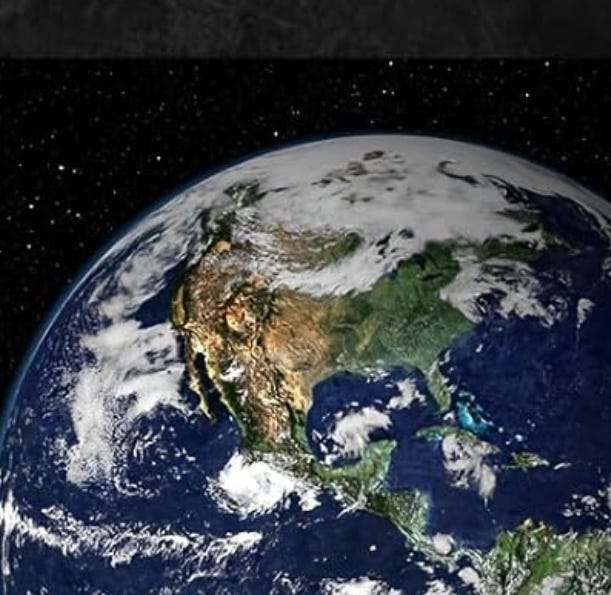
Sometimes understanding comes not from taking things apart, but from seeing how everything is interconnected. Biosphere Earth is the fragile living system that sustains life. The biosphere is the thin layer of Earth—land, water, and atmosphere—where all life exists.
Global Warming vs. Climate Change
People often use “global warming” and “climate change” interchangeably, but they are not the same:
Global warming refers specifically to the long-term rise in Earth’s average temperatures, caused mainly by greenhouse gases trapping heat.
Climate change is the broader, system-wide disruption that includes global warming plus shifts in weather patterns, oceans, ice systems, ecosystems, and extreme events.
Global warming is a symptom; climate change is the consequence. Focusing only on rising temperatures misses the bigger picture of how energy moves and interacts across the planet.
Heat Isn’t the Whole Story
Most people think climate change is simple:
“More heat in → planet warms.”
But incoming solar energy has stayed nearly constant. What’s changed is how the Earth lets heat escape. Greenhouse gases act like insulation—they trap energy that would normally leave. That trapped energy destabilizes oceans, weather, forests, water cycles, and ice systems. It shifts seasons, intensifies extremes, and pushes ecosystems past recovery thresholds.
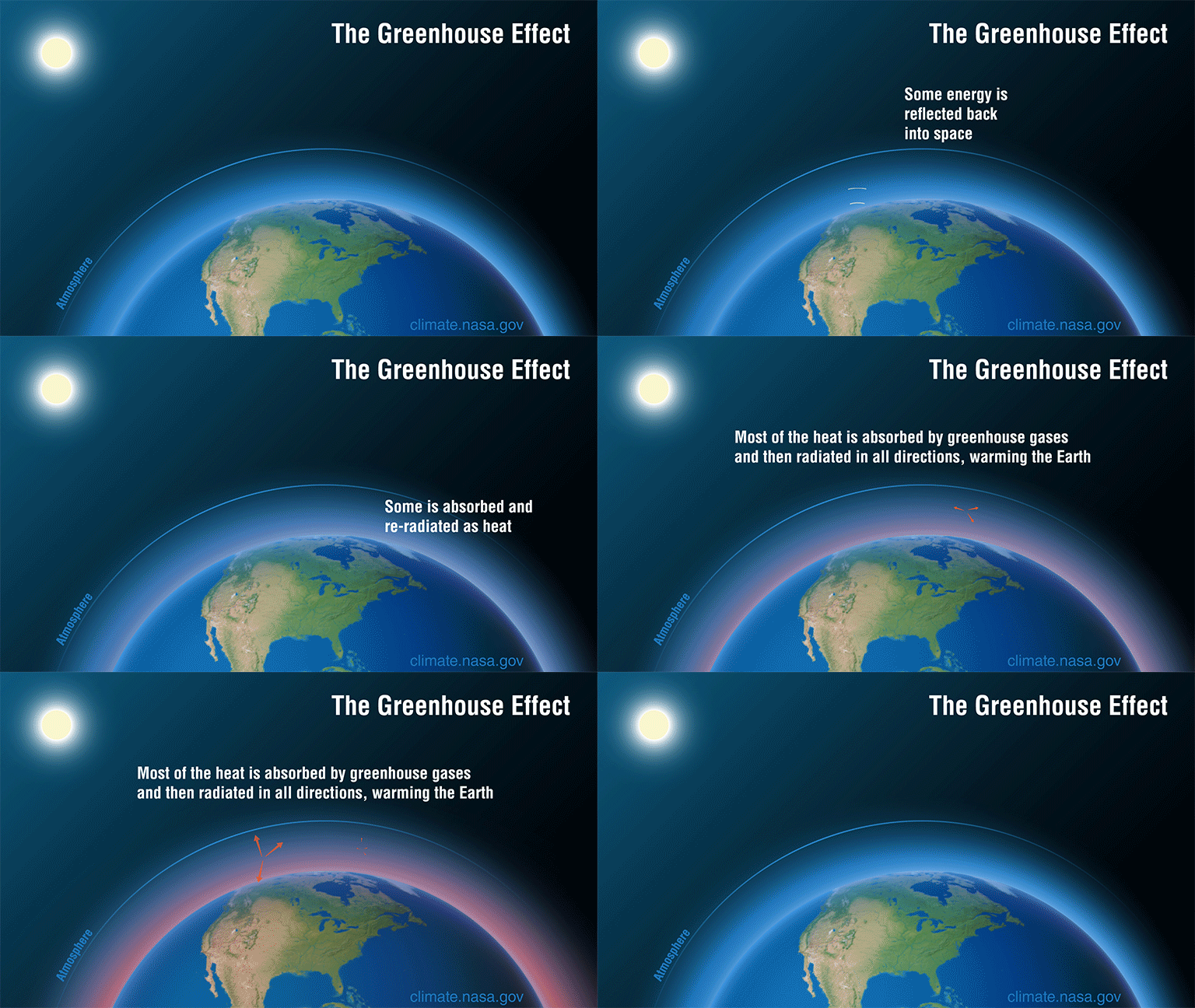
Earth stays at a stable temperature only when incoming solar radiation is balanced by outgoing heat energy that radiates back into space. If more energy is absorbed than emitted, the planet warms; if the opposite happens, it cools. This balance is known as Earth’s energy budget. Greenhouse gases (like carbon dioxide, methane, and others) don’t cause more sunlight to hit Earth — but they affect how heat leaves the planet. Sunlight warms Earth’s surface, which then sends heat back up as infrared radiation. Greenhouse gas molecules absorb much of that outgoing heat, then re-emit it in all directions, including back toward the surface. This reduces the amount of heat that escapes to space and effectively traps energy in the climate system — similar to how insulation traps heat indoors.
Climate change is about systems behavior. Heat is the energy input, but the movement, storage, and feedbacks of that energy across Earth’s interconnected systems drive impacts:
Water cycle disruptions: extreme floods, droughts, altered rainfall
Ocean changes: currents, sea level rise, acidification, marine heatwaves
Cryosphere effects: melting ice and snow amplify warming through albedo changes
Ecosystem responses: shifts in forests, agriculture, and wildlife affect carbon storage and local climates
Atmospheric feedbacks: clouds, aerosols, and greenhouse gases interact in complex ways
Here is another way of looking at this
Energy flows matter more than Heat Alone—it’s about energy flows. When greenhouse gases rise, they slow the outward flow, creating a persistent energy imbalance:

Excess energy doesn’t just warm the air. Air temperature captures only a fraction of system response. Most of the energy is stored elsewhere, fueling climate change impacts far beyond simple warming.
That breakdown of where excess heat from global warming goes (about ~90 % into the oceans, ~3 % into ice melt, ~3 % warming land, ~1 % warming the atmosphere) comes from scientific assessments of Earth’s energy budget — particularly the way excess energy (energy imbalance) is distributed among components of the climate system: ocean heat uptake, ice melt, land heating and atmospheric warming.
A widely‑cited source for this specific distribution is the IPCC Sixth Assessment Report (AR6), Working Group I: it notes that ocean heat uptake accounts for about 91 % of the total energy change, with the remainder going into land, ice melt and warming of the atmosphere.
Glaciers and Mega-Storms
Temperature is only one piece of the puzzle.
Glaciers lose mass from reduced snowfall, changes in ice albedo, or warm ocean currents—even if local air temperatures aren’t extreme.
Mega-storms intensify due to ocean heat, atmospheric moisture, wind patterns, and regional geography—not just hotter air.
Focusing only on heat or air temperature oversimplifies climate change and risks misdirecting adaptation efforts.
Glaciers are climate regulators
Glaciers are not simply bystanders of the climate crisis. They are active parts of the climate system, and their decline can amplify the very changes driving their disappearance. Their bright white surfaces (when pollution is not widely deposited) reflects sunlight back into the atmosphere, helping temper warming in mountain environments – something known as albedo. As ice and snow shrink, that reflective shield is reduced, exposing darker surfaces that absorb more heat and can accelerate warming and melt. The report also notes that glaciers play a role in regulating local weather systems as well as global hydrology patterns that are already being altered. Read more at: https://www.unep.org/news-and-stories/story/what-are-glaciers
Mega storms
Scientists using weather satellites have found that extremely cold clouds, called deep convective clouds, often correspond to extreme storms over tropical oceans. When precipitation from these clouds reaches the lower atmosphere, it can cause heavy rain and hail. By comparing daily counts of these clouds with sea surface temperatures, researchers found that more deep convective clouds form as sea surface temperatures rise. Read more at: https://science.nasa.gov/earth/climate-change/how-climate-change-may-be-impacting-storms-over-earths-tropical-oceans/#hds-sidebar-nav-2
The Takeaway
Global warming is the rise in average temperatures, caused by greenhouse gases. Climate change is the broader, system-wide disruption that results from this energy imbalance. The same energy comes in, but less leaves, so the system now stores and moves heat differently—destabilizing oceans, ice, ecosystems, and weather worldwide. Heat matters, but the dynamics of energy flows and feedbacks are what truly drive climate change.
When the world feels trapped in collapse, art becomes a beacon. Literature, painting, music, and film do more than reflect despair—they reimagine it.
And thanks to NASA/JPL-Caltech here is the simplified animation of the greenhouse effect.
References (select)
NASA Earth Observatory. The Greenhouse Effect & Earth’s Energy Budget. https://earthobservatory.nasa.gov/features/GreenhouseEffect
IPCC AR6 WG1 (2021). Climate Change 2021: The Physical Science Basis. https://www.ipcc.ch/report/ar6/wg1/
IPCC SROCC (2019). Special Report on the Ocean and Cryosphere in a Changing Climate. https://www.ipcc.ch/srocc/
Arts, the Environment, & Sustainability— by Ian Garrett —© 2015, Americans for the Arts https://www.americansforthearts.org/sites/default/files/Arts&America_Environment.pdf
UNEP (2023). Adaptation Gap Report 2023. https://www.unep.org/resources/adaptation-gap-report-2023
UNEP Emissions Gap Report 2025 Article: https://www.unep.org/news-and-stories/story/world-likely-exceed-key-global-warming-target-soon-now-what
UNEP (2025) Adaptation Gap Report 2025
IPCC Sixth Assessment ReportWorking Group 1: The Physical Science Basis Chapter 7: The Earth’s Energy Budget, Climate Feedbacks, and Climate
PEW Research Center: Climate, Energy & Environment https://www.pewresearch.org/topic/science/science-issues/climate-energy-environment/